





The proportion of Canadian children classified as being overweight or obese has risen from 14 % to 31 % among boys, and from 14 % to 25 % among girls, in the period between 1981 and 2007( Reference Tremblay, Shields and Laviolette 1 ). This trend is alarming because excess adipose tissue in children increases the risk of CVD and diabetes in adulthood( Reference Poirier, Giles and Bray 2 ). Secular trends of increasing energy intake in recent years( Reference Kaur, Hyder and Poston 3 ) may underlie the rising prevalence of overweight and obesity among youth in developed nations( Reference James 4 ). Therefore, public health professionals and researchers need to identify factors that contribute to excess energy intake among children.
A likely source of excess energy intake, and thus a potential contributor to the increased prevalence of overweight and obesity, is the consumption of sweetened beverages such as regular soft drinks and fruit juices( Reference Bray 5 – Reference Thundiyil, Christiano-Smith and Greenberger 7 ). A regular soft drink is a non-alcoholic beverage that typically contains water, sugar and high-fructose corn syrup as opposed to a diet soft drink, which contains a non-caloric sugar substitute. Since the end of World War II, sugar intake has increased dramatically as a result of soft drinks becoming a dietary staple in most countries( Reference Bray 5 ). Recent evidence indicates regular soft drink consumption has been increasing among children in the USA and Europe( Reference French, Lin and Guthrie 8 – Reference Nelson, Neumark-Sztainer and Hannan 11 ). Similarly, the proportion of daily energy from sweetened beverages increased significantly from 11·8 % in 1965 to 21·0 % in 2002 in the USA( Reference Duffey and Popkin 12 ). Thus, health professionals recommend that children limit beverages high in energy such as regular soft drinks and fruit juices from their dietary intake( 13 , 14 ).
Theories and models of obesity risk( Reference Davison and Birch 15 – Reference Swinburn and Egger 17 ) suggest that the environment may play an important role in sweetened beverage consumption( Reference Galvez, Pearl and Yen 18 ). For example, the social environment, which encompasses the immediate physical surroundings, social relationships and cultural milieus within which defined groups of people function and interact( Reference Barnett and Casper 19 ), may influence the consumption of soft drinks and juices. Within the home environment, parental characteristics, attitudes and behaviours are associated with the general eating behaviour of pre-school children( Reference Campbell, Crawford and Hesketh 20 – Reference Savage, Fisher and Birch 23 ). For instance, having more than two children within the family, the mother having low education, the mother being unemployed or maternal perception that healthy food is less tasty were all associated with greater excess food intake (including sweet and savoury snacks, sweetened beverages and French fries)( Reference Vereecken and Maes 24 ). Conversely, the mother being 35 years of age or older and having a high health-attitude score have been associated with a lower excess food intake( Reference Vereecken and Maes 24 ). It is likely that parents and siblings may act as role models to encourage children to consume novel food and beverages( Reference Campbell, Crawford and Hesketh 20 , Reference Benton 22 , Reference Savage, Fisher and Birch 23 ). A parent can control his/her child's sweetened beverage consumption by placing restrictions on the number of soft drinks permitted each day( Reference Grimm, Harnack and Story 25 , Reference Nickelson, Roseman and Forthofer 26 ), limiting the accessibility of regular soft drinks in the home and limiting participation in sedentary behaviours such as viewing television( Reference Thomson, Spence and Raine 27 ). Evidence also suggests that imposing stringent parental controls can lead to preferences for energy-dense foods and drinks, such as sweetened beverages( Reference Campbell, Crawford and Hesketh 20 , Reference Birch and Fisher 21 , Reference Savage, Fisher and Birch 23 ).
Studies that have identified sociodemographic and behavioural risk factors for regular soft drink and sweetened beverage consumption among pre-school children are limited( Reference Vereecken and Maes 24 , Reference Grimm, Harnack and Story 25 , Reference Keller, Kirzner and Pietrobelli 28 – Reference Sweetman, Wardle and Cooke 30 ). Increased sweetened beverage consumption was found to be associated with reduced milk intake among 3- to 7-year-old children( Reference Keller, Kirzner and Pietrobelli 28 ). Similarly, the enjoyment of drinking milk( Reference Grimm, Harnack and Story 25 , Reference Fiorito, Marini and Mitchell 29 ) and water( Reference Grimm, Harnack and Story 25 , Reference Denney-Wilson, Crawford and Dobbins 31 ) were associated with decreased likelihood of drinking regular soft drinks among children, while the desire to drink( Reference Sweetman, Wardle and Cooke 30 ) was associated with increased likelihood of regularly drinking soft drinks among pre-school children.
Beyond the household, neighbourhood environment may influence health behaviour and obesity risk among children( Reference Simen-Kapeu, Kuhle and Veugelers 32 , Reference Spence, Cutumisu and Edwards 33 ). However, access to sweetened beverages in the neighbourhood has yet to be examined. A neighbourhood with limited access to grocery stores, and therefore limited access to healthy beverage choices, but having many fast-food restaurants and corner stores may encourage parents to purchase sweetened beverages. Therefore, more research is needed to determine if neighbourhoods and the accessibility of commercial establishments such as grocery stores, corner stores and fast-food restaurants influence sweetened beverage consumption among children.
Although several risk factors for consumption of sweetened beverages have been identified among school-aged children and adolescents( Reference Rajeshwari, Yang and Nicklas 9 , Reference Naska, Bountziouka and Trichopoulou 10 , Reference Grimm, Harnack and Story 25 , Reference Nickelson, Roseman and Forthofer 26 , Reference Denney-Wilson, Crawford and Dobbins 31 , Reference Bere, Glomnes and te Velde 34 , Reference Striegel-Moore, Thompson and Affenito 35 ), limited research has been conducted among pre-school children. Eating behaviours are developed at an early age and by adolescence these behaviours are well established( Reference Birch and Fisher 21 ). Thus the determinants of eating behaviours will likely vary across these age groups( Reference Birch and Fisher 21 ). For instance, pre-school children may have limited control in making decisions about dietary intake and are exposed to different environments compared with older children, such as the day-care setting( Reference Birch and Fisher 21 ). Such dissimilarities may result in differing risk factors for regular soft drink consumption between these two groups of children. Therefore, the purpose of the present study was to determine the sociodemographic, behavioural and environmental characteristics associated with regular soft drink and fruit juice consumption among pre-school children.
Methods
Children who were attending a public health unit for pre-school immunization in the Edmonton region of Alberta, Canada, between November 2005 and August 2007 were recruited for a longitudinal study on determinants of childhood obesity (Spatial Health Assessment of Preschooler's Environments (SHAPEs))( Reference Spence, Carson and Casey 36 , Reference Carson, Spence and Cutumisu 37 ). The data reported herein are from the baseline phase of that study. Although not mandatory, a high proportion of children in the region visit these health centres for immunizations and other services from birth through to pre-school. Therefore, these health centres allow access to the majority of children in the region.
If contact was made with the parent, the recruitment rate was approximately 93 %. In total, 2114 parents participated with their 4- or 5-year-old child. Of these, 354 were excluded in the current analyses because they had at least one incomplete response to the socio-economic or demographic questions. The study was approved by the Health Research Ethics Board of the University of Alberta.
Measures
Parents were asked to complete a brief survey including questions on their child's food and beverage consumption, eating behaviours, physical activity and screen time. They were also asked some basic questions about their child's health and whether their child attended day care, a play school, pre-school or kindergarten. For the purpose of the present study, we focused on the portion of the questionnaire pertaining to beverage intake.
Demographics
The child's age and sex were collected by a questionnaire administered to their parents. Because children's addresses were not available, six-digit postal codes recorded in community health records were used to obtain neighbourhood-level information related to socio-economic status (SES). Specifically, the postal codes were geocoded (assigned a spatial reference) using the Postal Conversion File produced by Statistics Canada( 38 ) to locate the children's households within their dissemination areas. By using the dissemination areas, we were able to link Canada Census data to create SES variables. More specifically, based on the 2006 census( 39 ), a neighbourhood SES index was created for each dissemination area where the centroids of children's postal codes were located. This index was calculated by adding net educational level, median income of all census families, and then subtracting the proportion of unemployed( Reference Demissie, Hanley and Menzies 40 ). Dissemination areas where the children resided were then classified into high, medium or low neighbourhood SES based upon a tertile split.
Desire to drink and food fussiness
The desire to drink (the quantity and frequency a child wants to drink) and food fussiness (pickiness) subscales of the Children's Eating Behaviour Questionnaire (CEBQ) were included as behavioural factors in the present study. The CEBQ is a thirty-five-item parent-report questionnaire designed to assess a range of eating behaviours of children( Reference Wardle, Guthrie and Sanderson 41 ). Response options for all items were measured on a 5-item Likert scale ranging from ‘never’ to ‘always’. The CEBQ has previously demonstrated good internal reliability, with Cronbach's α ranging between 0·72 and 0·91( Reference Wardle, Guthrie and Sanderson 41 ), and good test–retest reliability with correlations ranging from r = 0·52 to r = 0·87 in pre-school children( Reference Wardle, Guthrie and Sanderson 41 ).
Screen time
Parents were asked to report their child's participation in sedentary behaviours, such as viewing television and playing video games. The American Academy of Pediatrics Committee on Nutrition( Reference Krebs and Jacobson 42 ), the Canadian Paediatric Society( 43 ) and the Council on Sports Medicine and Fitness( 44 , Reference Tremblay, Leblanc and Janssen 45 ) recommend no more than 2 h of non-school-related screen time daily( Reference Tremblay, Leblanc and Janssen 45 ). Therefore, screen time (television viewing and video game playing) was dichotomized into ≤2 h/d and >2 h/d.
Beverage consumption
An instrument developed by nutritionists in the public health authority was used to assess dietary intake of the children. Parents were asked, ‘Thinking back over the past couple of weeks, how many servings has your child had of the following foods and beverages? Estimate the number of servings for each food or beverage, either over an average day or over an average week. If your child rarely or never has the food or beverage, write zero per day or per week’. The options for beverages included soft drinks, fruit juice, milk and water. Responses were dichotomized to zero regular soft drink consumption and any (>0 cups) regular soft drink consumption in an average week. For fruit juice consumption, responses were categorized into <1 serving/d (where 1 serving = 1 cup or 236 ml) and more than the recommended intake of fruit juice of ≥1 serving/d( 13 ). Milk consumption was dichotomized into <2 servings/d and ≥2 servings/d (the recommendation for Milk and Alternatives from Eating Well with Canada's Food Guide). Water consumption was dichotomized into <3 servings/d and ≥3 servings/d( 13 ).
Number of grocery stores, fast-food restaurants and convenience stores in the proximity of the child's residence
Information on location of commercial establishments in Edmonton for 2004 was supplied by the Health Inspection Division within Capital Health and/or found in the Alberta First Business Directory( 46 ). From these data sets, we selected grocery stores, fast-food outlets and convenience stores. Definitions for these establishments are given elsewhere( Reference Spence, Cutumisu and Edwards 47 ). ArcGIS version 9·2 (ESRI Inc., Redlands, CA, USA) was used to create aerial buffers of 1 km around the point indicating the location of a child's postal code. To calculate the number of establishments within each buffer, the Counts Points in Polygon analysis of the Hawth's tools extension for ArcGIS was utilized( Reference Beyer 48 ). The number of grocery stores within 1 km was categorized into none, 1–3 or ≥4. The number of fast-food restaurants within 1 km was categorized into none, 1–10 or ≥11. The number of conveniences stores within 1 km was categorized into none, 1–3 or ≥4. Aerial buffers were employed instead of network buffers because, in comparison to older cities in North America, Edmonton is more of a modern city characterized by cul-de-sacs, informal alleys that may increase connectivity and road networks with many missing or incomplete sidewalks. As a result, aerial buffers might be a better way to capture the availability of stores within an individual's neighbourhood in comparison to a network buffer. An aerial buffer of 1 km around homes delimits a walkable neighbourhood( Reference Moudon, Chanam and Lee 49 ).
Data analysis
Descriptive statistics were conducted to determine the frequency distributions of the sociodemographic variables. To identify potential correlates of regular soft drink and fruit juice consumption, a step-up approach was adopted. First, χ 2 tests were performed to test for differences in beverage consumption across sociodemographic strata. Second, in separate multivariate binomial regression models, the regression of regular soft drink and fruit juice consumption v. sociodemographic variables (sex, age, SES, attendance in day care) was preformed among the children who had no missing information (n 1760). Third, analyses were conducted adding the behavioural factors (milk consumption, water consumption, participation in screen time, desire to drink and fussiness to food). Sixty-four children were excluded due to missing response of one of the behavioural variables (n 1696). Finally, the environmental factors (grocery stores, fast-food restaurants and convenience stores within 1 km of the participant's residence) were added to the models. Due to missing data in the environmental variables, another 517 children were excluded (n 1179).
Results
Characteristics of the 1760 children whose parents responded to the survey appear in Table 1. Overall, the sample was evenly divided across age categories with slightly more boys than girls. Just over 55 % of participants lived in high-SES neighbourhoods. Close to 90 % of the children attended day care. Fewer than 45 % of the sample had parents report they participated in >2 h of screen time daily. The average desire to drink and food fussiness scores were 2·8 (sd 0·9) and 3·1 (sd 0·8), respectively.
Table 1 Characteristics of pre-school students participating in the Spatial Health Assessment of Preschooler's Environments (SHAPEs) study, Edmonton, Alberta, Canada (n 1760)
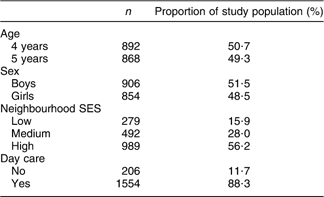
SES, socio-economic status.
Of the sample, 68·3 % of the children consumed ≥2 servings of milk daily while 36·6 % drank ≥3 servings of water daily. In terms of sweetened beverage consumption, 46·1 % consumed regular soft drinks in the previous week and 29·7 % consumed ≥1 serving of fruit juice daily.
Beverage consumption was associated with sociodemographic factors (see Table 2). Larger proportions of boys consumed regular soft drinks (χ 2 = 7·99, P < 0·01) and milk (χ 2 = 7·22, P < 0·01) in comparison to girls. Larger proportions of children living in low-SES neighbourhoods (χ 2 = 14·14, P < 0·01) consumed regular soft drinks and fruit juices (χ 2 = 5·85, P = 0·05) in comparison to those living in higher-SES neighbourhoods. Conversely, larger proportions of children from high-SES neighbourhoods consumed milk (χ 2 = 5·83, P = 0·05). Children not attending day care were significantly more likely to drink water (χ 2 = 5·07, P = 0·02) than those who attended day care. Regular soft drink consumption was not significantly associated with milk consumption (χ 2 = 0·95, P = 0·33).
Table 2 Bivariate analysis identifying correlates associated with regular soft drink consumption among pre-school children participating in the Spatial Health Assessment of Preschooler's Environments (SHAPEs) study, Edmonton, Alberta, Canada (n 1760)
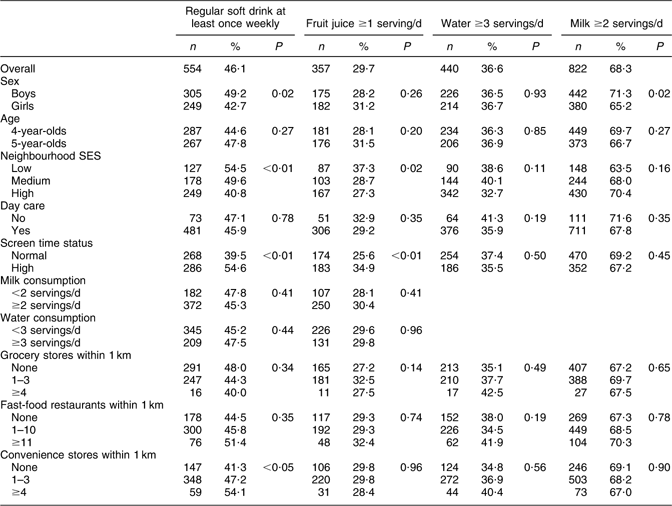
SES, socio-economic status.
Regular soft drink consumption
At the first step, the multivariate logistic regression analysis (Table 3) indicated that girls (relative risk (RR) = 0·97, 95 % CI 0·78, 0·96) were significantly less likely to have consumed regular soft drinks in comparison to boys. Children in low-SES (RR = 1·24, 95 % CI 1·09, 2·42) and medium-SES neighbourhoods (RR = 1·17, 95 % CI 1·04, 1·31) were significantly more likely to consume regular soft drinks in comparison to those in higher-SES neighbourhoods. When the behavioural covariates were included, similar results were obtained. However, 5-year-olds were now significantly more likely to consume regular soft drinks (RR = 1·10, 95 % CI 1·00, 1·22) in comparison to 4-year-olds. Children categorized as having a high screen time status (RR = 1·23, 95 % 1·11, 1·36) or a higher desire to drink (RR = 1·15, 95 % CI 1·09, 1·21) were also significantly more likely to have consumed regular soft drinks. When the environmental factors were added, children who had 1–3 grocery stores (RR = 0·84, 95 % CI 0·73, 0·96) and ≥4 grocery stores (RR = 0·64, 95 % CI 0·42, 0·98) near their residence were significantly less likely to drink regular soft drinks. Having a fast-food restaurant or a convenience store within 1 km of the residence was not associated with regular soft drink consumption.
Table 3 Multivariate analysis of correlates of regular soft drink consumption among pre-school children participating in the Spatial Health Assessment of Preschooler's Environments (SHAPEs) study, Edmonton, Alberta, Canada
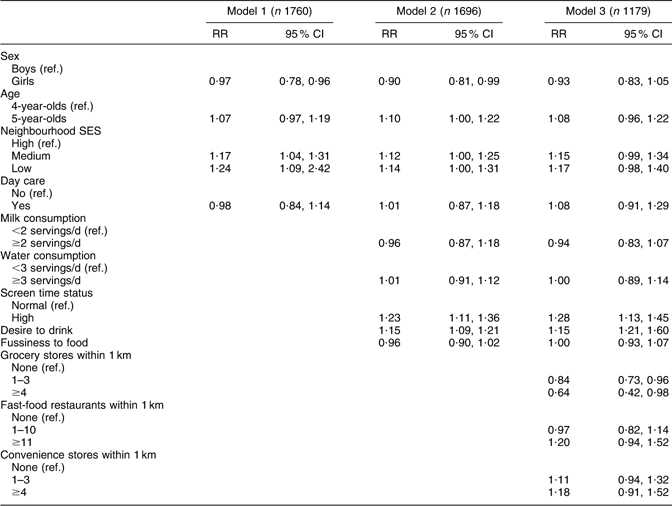
RR, relative risk; SES, socio-economic status; ref., reference category.
Fruit juice consumption
The multivariate regression analysis (Table 4) including only sociodemographic factors identified no significant risk factors for increased likelihood of fruit juice consumption. However, when behavioural factors were added, high participation in screen time (RR = 1·17, 95 % CI 1·09, 1·25) and milk consumption (RR = 1·17, 95 % CI 1·07, 1·27) were significantly associated with fruit juice consumption. When environmental factors were added to the model, high participation in screen time (RR = 1·16, 95 % CI 1·06, 1·27) and milk consumption (RR = 1·17, 95 % CI 1·06, 1·29) were significantly associated with fruit juice consumption. No environmental factors were associated with fruit juice consumption.
Table 4 Multivariate analysis of correlates of fruit juice consumption among pre-school children participating in the Spatial Health Assessment of Preschooler's Environments (SHAPEs) study, Edmonton, Alberta, Canada

RR, relative risk; SES, socio-economic status; ref., reference category.
Discussion
The purpose of the present study was to identify sociodemographic, behavioural and environmental correlates of sweetened beverages among pre-school children. Approximately 50 % of the children consumed regular soft drinks and almost 30 % drank more than 1 serving of fruit juice daily in the previous week. SES, participating in screen time for >2 h/d, desire to drink and access to grocery stores within 1 km of the child's residence were significantly associated with regular soft drink consumption. Screen time participation, desire to drink and milk consumption were associated with fruit juice consumption. Although the population represented in the current investigation was pre-school children, similar trends in sweetened beverage consumption are found among older children in developed countries. Specifically, those from lower-SES backgrounds, who were boys and had high desire to drink were more likely to consume regular soft drinks( Reference Naska, Bountziouka and Trichopoulou 10 , Reference Grimm, Harnack and Story 25 , Reference Sweetman, Wardle and Cooke 30 , Reference Denney-Wilson, Crawford and Dobbins 31 ).
Although previous research has indicated regular soft drink consumption displaces milk consumption( Reference Fiorito, Marini and Mitchell 29 , Reference Vartanian, Schwartz and Brownell 50 , Reference Marshall, Eichenberger Gilmore and Broffitt 51 ), only milk consumption was associated with a greater likelihood of fruit juice consumption. This may be an indication that fruit juice and milk may both be perceived to be healthy by parents. Interventions may be needed in order to promote intake of beverages such as water as healthier options to fruit juice.
As observed in previous research with adolescents( Reference de Bruijn and van den Putte 52 , Reference Kremers, van der Horst and Brug 53 ), partaking in sedentary behaviour was associated with sweetened beverage consumption among our participants. This clustering of obesogenic behaviours is not uncommon among adolescents( Reference Plotnikoff, Karunamuni and Spence 54 ) and may warrant more prevention efforts targeting young children. Furthermore, the finding that SES was no longer associated with fruit juice consumption after behavioural factors, such as screen time participation and desire to drink, were added to the model suggests the latter may mediate this relationship. Children from low-SES backgrounds are more likely to participate in high levels of screen time( Reference Carson, Spence and Cutumisu 55 ). This may be due to parents from low-SES backgrounds being more likely to use the television as an inexpensive form of supervision( Reference Gordon-Larsen, Griffiths and Bentley 56 , Reference Hanson and Chen 57 ). Thus, implementing policies and programmes that make supervision of children more affordable and accessible, which can in turn lead to a reduction of sedentary behaviour participation, may be an effective strategy for reducing sweetened beverage consumption particularly among children from lower-SES backgrounds.
Taxation on regular soft drinks has been proposed as an effective strategy for decreasing sweetened beverage consumption( Reference Sacks, Veerman and Moodie 58 – 60 ). Findings from a recent study indicate that state soft drink taxes in the USA have a small, yet significant impact on behaviour and weight( Reference Fletcher, Frisvold and Tefft 61 ). However, children from poorer backgrounds are more likely to consume foods that are high in energy( Reference Drewnowski 62 – Reference Drewnowski 64 ) and more likely to consume regular soft drinks( Reference Janssen, Katzmarzyk and Boyce 65 ). Thus, a tax on regular soft drinks may disproportionately affect families from lower-income backgrounds. These households have less disposable income and therefore a higher proportion of their income is spent on food in comparison to higher-income households. Any increase in the price of food and beverages would unfairly affect families already struggling to purchase food. However, other researchers argue there is no empirical evidence that a tax on regular soft drinks would be regressive and unfairly penalize low-income individuals and households( Reference Faulkner, Grootendorst and Nguyen 66 ). Nevertheless, our results indicate children from low-SES backgrounds are more likely to consume regular soft drinks and if taxation has no effect on the purchase of these beverages, excessive taxation of such products may have an economic impact on these families.
Another interesting finding from our investigation is that children who attended day care were significantly less likely to drink water. It is highly recommended that children should be encouraged to consume water to quench thirst( 13 ). The day-care setting would be ideal to promote water consumption and implement adoption of this behaviour since a large number of children are enrolled in such schools. Furthermore, tap water would be more affordable and accessible in comparison to other beverages such as fruit juice and milk.
Providing families with a variety of options to purchase groceries may also be beneficial in preventing excessive energy intake among pre-school children through regular soft drink consumption. Our study is one of the first to identify that accessible grocery stores within close proximity to place of residence is associated with a lower likelihood of regular soft drink consumption among children. This finding highlights the potential importance of the presence of commercial establishments that offer a variety of healthy food options within the neighbourhood. Other work indicates the presence of supermarkets in a neighbourhood is associated with reduced odds for obesity among residents( Reference Bodor, Rice and Farley 67 ) and a high density of fast-food restaurants or convenience stores is associated with greater likelihood of being obese( Reference Spence, Cutumisu and Edwards 47 , Reference Li, Harmer and Cardinal 68 ). Therefore, the neighbourhood food environment may be an important determinant of sweetened beverage consumption among pre-school children.
Our study is not without several limitations that should be acknowledged. Many participants were excluded due to missing information, which restricts the comparability of the three models across the different sub-samples. The cross-sectional nature of the design limits our ability to establish cause-and-effect relationships. SES information was available only at the neighbourhood level, and not the individual level. Also, parental reports of eating behaviour and beverage intake may be subject to error because parents had limited opportunity to observe their child eating throughout the day, which is important to note since 88 % of the children attended day care. Similarly, reporting of eating behaviours may have been biased due to the parent's motivation to provide socially desirable responses. Therefore, the strength of associations would most likely have been underestimated( Reference Rothman, Greenland and Lash 69 ). Finally, several correlates known to be associated with soft drink consumption were not included in the present study. For example, parental soft drink consumption and high access to regular soft drinks in the home( Reference Fiorito, Marini and Mitchell 29 ) have been found to be positively associated with soft drink consumption but were not included in the analyses.
The present investigation is one of the first to examine correlates of sweetened beverage consumption among pre-school children. Results indicate certain sociodemographic, behavioural and environmental factors are significantly related to consumption of these beverages. Future research should include longitudinal analyses to gain a better understanding of these factors and their influence on regular soft drink consumption among children as they age. Knowledge from such studies may aid public health practitioners to develop and implement interventions designed to prevent adoption of sweetened beverage consumption among children.
Acknowledgements
This work was supported by the Canadian Institutes of Health Research (CIHR), the Heart and Stroke Foundation of Canada, and the Social Sciences and Humanities Research Council (SSHRC). R.A.P. was supported by a CIHR–Training in Obesity Fellowship award. There are no conflicts of interest to declare. R.A.P. conceptualized the project, performed all analyses and wrote the article. J.C.S. conceptualized the project, is the principal investigator for the Spatial Health Assessment of Preschooler's Environments (SHAPEs) study, and contributed to the writing of the manuscript. N.C. is the health geographer of the SHAPEs study and helped conceptualize the geographical variables. L.C. helped developed the dietary intake assessment tools and contributed to the manuscript. K.S. helped with the nutrition aspects of the article and contributed to the manuscript.



