





INTRODUCTION
The bacterium Streptococcus pneumoniae, commonly known as pneumococcus, remains a major contributor to morbidity and mortality throughout the world. In recent decades, the global trend of increasing prevalence of resistant pneumococci has emerged as a clinical problem. Infections caused by non-susceptible pneumococci may lead to severe diseases that are extremely difficult to treat, as well as complicating treatment decisions and increasing the use of medical resources. Resistant S. pneumoniae is a direct consequence of antibiotic consumption in the community as antibiotics reduce transmission of susceptible strains with which resistant strains compete, thereby promoting the spread of resistant strains [Reference Lipsitch and Samore1]. Under the selective pressure of antibiotic usage, resistant strains are able to spread widely. Throughout the world, several actions have been undertaken in hope of slowing or reversing the growing resistance rates in pneumococci [Reference Arason2, Reference Ekdahl3].
Besides causing diverse clinical manifestations such as otitis media, pneumonia, septicaemia, and meningitis, this pathogen is commonly found in the nasopharynx of healthy people, especially in young children attending day-care centres (DCCs). Pneumococcal carriage is mostly transient and asymptomatic, but constitutes a prerequisite to pneumococcal disease, and is also the main reservoir responsible for infecting new hosts. Since antibiotic therapy leads to selection of resistant strains in the nasopharynx [Reference Cohen4–Reference Ghaffar6], control of nasopharyngeal carriage is very important to manage the spread of resistant strains. The evolution of novel antibiotic resistant strains of pneumococci seems to occur very rarely. However, once in existence and under the selective pressure of antibiotics, resistant strains are able to spread widely. For instance, it has been reported that a limited number of international epidemic clones are responsible for the increasing rates of antibiotic-resistant S. pneumoniae in the community [Reference Sjostrom7]. The prevalence of penicillin non-susceptible pneumococci (PNSP; pneumococci with MIC of penicillin G ⩾0·12 mg/l) has been reported as being correlated with the community utilization of penicillin [Reference Arason8, Reference Melander9]. Thus far, Sweden has had a relatively low frequency of PNSP compared to other countries as well as a low rate of penicillin sales [Reference van de Sande-Bruinsma10]. The selective pressures imposed by antibiotics on the pneumococcal ecology are also influenced by other factors, such as competition between pneumococcal strains and the use of conjugate vaccines. The study of various factors that may contribute to a reduction or a delay of the spread of resistant pneumococci is therefore highly relevant from a public health perspective. I emphasize the need to examine the community spread of PNSP in conjunction with a competing susceptible strain while between-strain competition seems to be an important factor in pneumococcal transmission dynamics [Reference Auranen11]. For such purposes, mathematical and computational models provide convenient tools to improve understanding of the population dynamics of PNSP and to evaluate control measures. None of the previous models of pneumococcal transmission [Reference Andersson12–Reference Karlsson14] consider the impacts of between-strain competition and penicillin usage on the spread of PNSP.
In the present study, a probabilistic individual-based network model has been developed to study how between-strain competition and penicillin consumption influence the co-existence of two pneumococcal strains in an age-structured population. Existing data for demography, epidemiology and penicillin sales were employed in order to imitate a ‘small-world’ average community in Sweden. This network-based approach considered the pattern of contacts between individuals and the probability of transmission through any given contact, thereby providing a high degree of realism. The primary aims were to examine the effects of reduced penicillin usage within specific age groups and to assess the impact of penicillin consumption on the age distribution for prevalence of pneumococcal carriage.
METHODS
Model design
An in silico population consisting of 50 000 individuals was generated. Each individual was assigned age according to demographic data of Sweden [15]. All simulations were initiated with equivalent sets of carriers, i.e. same initial numbers and age distribution, to reflect observed age distribution for pneumococcal prevalence [Reference Hogberg16] and to permit the simulations to start with established pneumococcal prevalence in the community as described previously [Reference Karlsson14]. The initial number of 250 carriers for each in silico pneumococcal strain corresponded proportionally to the prevalence of a major strain in Sweden [Reference Borres17–Reference Sandgren19]. Discrete time-steps were used (1 week) and the simulations were run for 520 weeks (i.e. 10 years). The update of the model was implemented to occur synchronously at each time-step. Both the age structure in the population and the network defining the social contacts were assumed to be constant over the simulated time. As this model is probabilistic, each run produced different results due to chance and the results of 100 repeated simulations were averaged to find the most likely outcome. By using such a high number of iterations, a normal distribution for the model outcome could be assumed. The output data were statistically analysed using Student's t test for comparisons of sample means, whereas a two-proportion z test was employed for analysing differences between proportions in the samples. P values <0·05 were considered significant. The simulation procedures were programmed in matlab version 7.8.0 (The Mathworks Inc., USA, whereas PASW version 18.0 (SPSS Inc., USA) was used for statistical analyses.
Network structure in the population
Only those social contacts considered to be most important for transmission of pneumococci were implemented, i.e. households, DCCs, schools, and other close contacts. The contact network was generated from available data of Sweden from the mid-2000s [Reference Andersson12, Reference Andersson17–20]. Each existing contact in the in silico population comprised a possible route for pneumococcal transmission. The probability for transmission to occur differed between different contact types, and an age-related susceptibility was implemented (Table 1) as described previously [Reference Karlsson14]. Large variations in duration of pneumococcal carriage have been observed, although there appears to be an inverse relationship between carriage duration and age [Reference Ekdahl3]. For each age group, respectively, previously reported durations of carriage were implemented in the model. During the simulations, an individual was assigned a carriage duration at the time point for colonization. A duration time was drawn from an exponential distribution with a mean dependent on the age of the colonized individual (Table 1).
Table 1. Baseline values used for the parameters in the pneumococcal network model
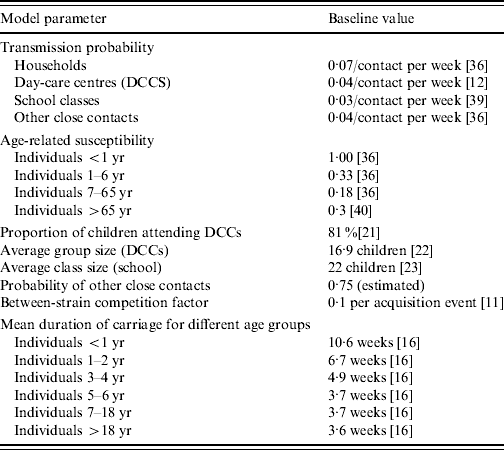
Demographic data of Sweden for 2006 were used for creating the network structure for the households in the model [20]. Children aged 0–18 years were assigned 0–3 siblings as follows: 19%, no siblings; 49%, one sibling; 29%, two siblings and 10%, three or more siblings [20]. A maximum of four children per household could be assigned since existing data describe households with more than four children in same category as households with exactly four children. The children were also assigned one or two parents randomly chosen from individuals aged 19–49 years. The motivation for using this age interval was that around 80% of the parents with children aged <18 years were aged 30–40 years according to previous reports [20]. Furthermore, around 27% of adults in Sweden live in households with children [20]. Of the 27% living with children, 81% of these adults live as a couple with their children and 19% are single parents [20]. Of the 73% of adults living in households without children, 35% live alone and the rest live as couple [20].
In Sweden, a majority (81% in 2008) of preschool children aged 1–5 years attend DCCs [21]. In the model the national average group size in DCCs (16·9 children) is used [22], which refers to the number of children in a classroom, not to the size of a DCC facility.
All children in Sweden aged 6–15 years attend school. In the model, the children were assigned a school class according to age. Statistics regarding precise class sizes do not exist; therefore, the typical size (22 children) for a class consisting of children aged 8–9 years [23] was applied for all age groups in the model.
Other close contacts were also implemented in the model; such social interactions were considered to represent other types of close contacts occurring in society, e.g. between children and their grandparents, which constitute possible transmission routes for pneumococci. In the model, this was accomplished by randomly generated contacts with an individual probability of 0·75 (i.e. on average each individual had 1·5 other close contacts). The interacting contacts were randomly chosen within the model population. The assumption of 1·5 other close contacts outside households, DCCs, and school classes might appear unlikely in other cultures than Sweden.
Outpatient penicillin consumption and disease progression
Outpatient penicillin users were initiated according to available data of penicillin sales in Sweden during 2008 for different age groups (see Table 2) [24]. In the model, this allotting of penicillin courses was unrelated to carriage of any pneumococcal strains. Since outpatient penicillin courses generally last for 5–10 days depending on the indication, the therapy period in the model was approximated to 1 week. If the penicillin recipient was a pneumococcus carrier, the consequences were dependent on the resistance characteristic of the colonizing strain. Carriage of susceptible strains were considered to be cleared in 80% of the cases [Reference Cohen4], since a successful antibiotic treatment does not always clear pneumococci from the nasopharynx [Reference Libson25]. In the model, carriage of PNSP in the nasopharynx was assumed not to be eradicated by penicillin treatment [Reference Cohen4]. Because the current levels of resistance to penicillin appear to have little, if any, clinical impact in non-meningeal infections, treatments with alternative antibiotics due to treatment failure were not considered in the model [Reference Craig26]. In individuals where penicillin therapy did not result in clearance of pneumococcal carriage, the bacteria were assumed to reside in the nasopharynx until predefined carriage duration was reached. During an ongoing penicillin course, the treated individuals in the model could not be colonized by the susceptible strain, only by the non-susceptible strain.
Table 2. Penicillin (PcV) sales in Sweden 2008 [24]
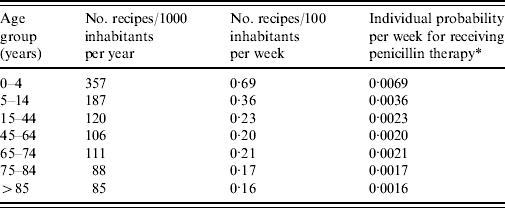
* In the model, the 75–84 and >84 years age groups were combined into one age group, i.e. >74 years, and the individual probability per week was averaged to 0·00165.
The model also reflected the progression from asymptomatic carriage to clinical disease (disease defined herein as a condition requiring an outpatient penicillin prescription). Existing data indicate that the risk for disease progression appears to be greatest soon after exposure and acquisition of the organism in the nasopharynx [Reference Gray, Converse and Dillon27]. Therefore, disease progression in the model was assumed to occur during the first or second week of colonization. The model did not consider any individual risk factors other than age for disease progression. Neither did the model implicate the progression of invasive pneumococcal infections; those patients are hospitalized for medical care, and were therefore not included in this outpatient category. The risk for disease progression was estimated by determining the ratio between the age-specific incidence of pneumococcal diseases [28, Reference Iwarson-Norrby29] and the incidence of pneumococcal carriers in defined age groups. The incidence for pneumococcal carriage was determined from carriage prevalence and duration [Reference Hogberg16], since prevalence is the product of incidence and duration. Figure 1 shows the estimated disease risks for different age groups used in the model.
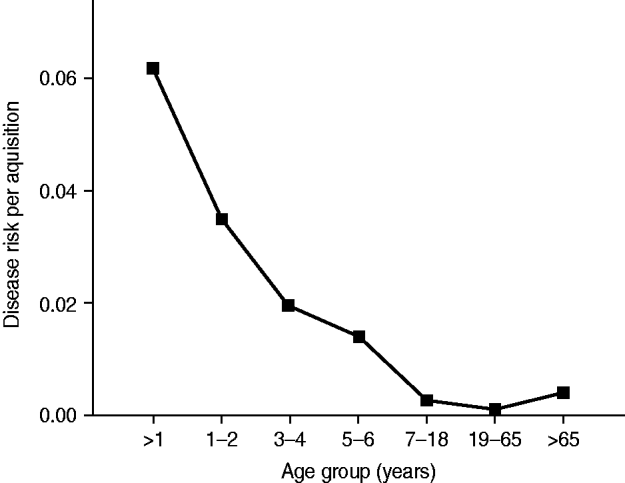
Fig. 1. Age-dependent risks for disease progression per colonization event. The parameter values for disease risks used in the model were calculated from incidences of pneumococcal disease and carriage for different age groups in Sweden [28, Reference Iwarson-Norrby29].
Model scenarios
Several model scenarios were set up and simulated. The scenarios are described in detail in Table 3. In scenarios describing spread of two strains, the model allowed simultaneous carriage in the same individual [Reference Dagan, Lipsitch, Tuomanen, Mitchell, Morrison and Spratt30]. In a previous study, Auranen et al. report that the acquisition rate of an additional serotype is ten times slower in children who already carry one serotype [Reference Auranen11]. This reduced acquisition rate for an additional serotype was applied for all pneumococci-carrying individuals in the model, not just the children.
Table 3. Descriptions and outcomes of scenario simulations
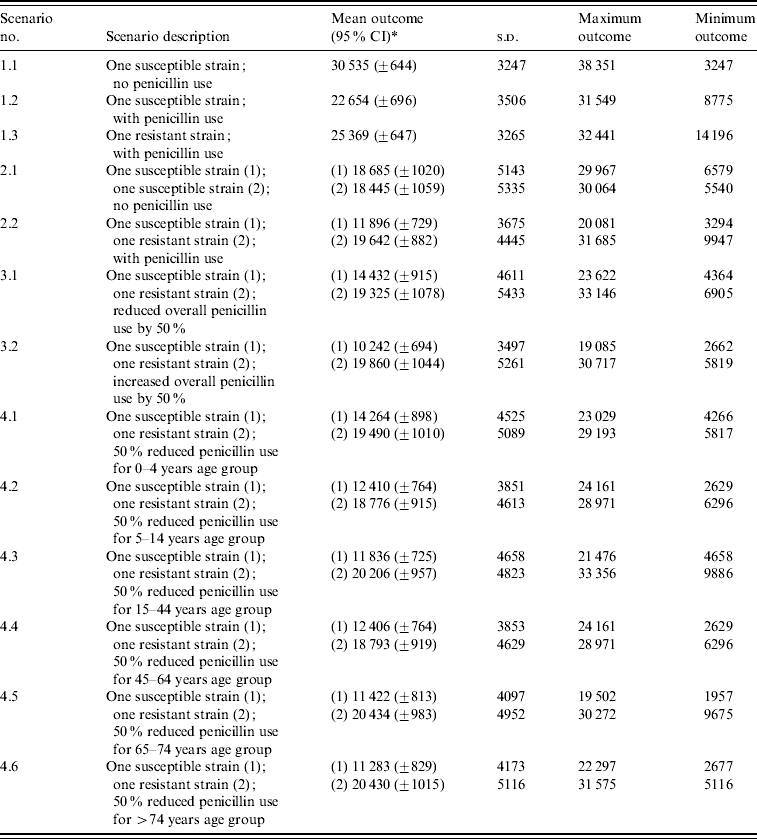
CI, Confidence interval; s.d., standard deviation.
* Mean outcome refers to the total number of transmissions for an average of 100 simulations.
In the model, any eventual fitness cost for the PNSP strain was excluded because of lack of data. If such a biological cost exists, it probably varies between strains [Reference Castle31], and moreover, some strains might have compensated for the resistance cost [Reference Cohen4, Reference Andersson32].
RESULTS
Pneumococcal carriage prevalence and age distribution
The initial scenario referred to as scenario 1.1 (see Table 3) simulated the spread of a susceptible strain with no between-strain competition in a population with no penicillin consumption. The averaged number of transmission events for 100 runs was 30 535 (95% CI ±644). In the following scenario set, the usage of penicillin was introduced (scenario 1.2). The inclusion of penicillin resulted in a transmission reduction by 25·1% (i.e. 22 654 transmissions, 95% CI ±696). Thereafter, the spread of a PNSP strain was simulated in a penicillin-consuming population (scenario 1.3). The incidence decline observed in scenario 1.2 caused by penicillin usage was partly recovered by the resistant strain (i.e. 25 369 transmissions, 95% CI ±648). The net effect of the resistance-promoting penicillin resulted in 12·0% more transmissions for the PNSP strain compared to the susceptible strain.
Analysing the initial scenario 1.1 revealed an age distribution for prevalence of pneumococcal carriage (see Fig. 2) corresponding well with previous studies [Reference Karlsson14, Reference Hogberg16]. The inclusion of penicillin consumption did not result in any significant changes in the age distribution for carriage prevalence of the susceptible strain (scenario 1.2). However, for the resistant strain, the age distribution in carriers was altered (scenario 1.3). Most notable was that the proportional prevalence increased for the 1–2 years age group (P<0·001) whereas it decreased for those aged >18 years (P<0·001).
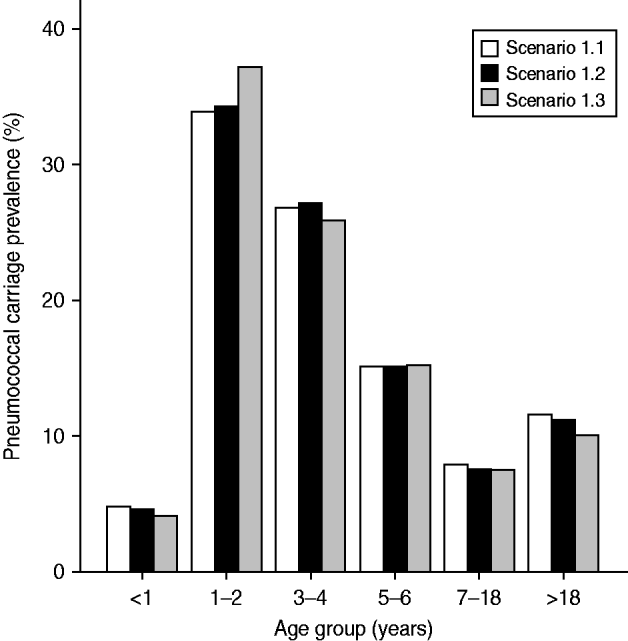
Fig. 2. Age distribution for pneumococcal carriage prevalence for different model scenarios. Scenario 1.1 reflects the spreading of a susceptible strain in a non-penicillin consumption background [carriage prevalence: <1 year: 4·8% (±0·1); 1–2 years: 33·9% (±0·5); 3–4 years: 26·8% (±0·4); 5–6 years: 15·1% (±0·3); 7–18 years: 7·9% (±0·2); >18 years: 11·6% (±0·3)]; in scenario 1.2 the spread of a susceptible strain in a penicillin-consuming population was simulated [carriage prevalence: <1 year: 4·7% (±0·1); 1–2 years: 34·3% (±0·7); 3–4 years: 27·2% (±0·6); 5–6 years: 15·1% (±0·5); 7–18 years: 7·6% (±0·3); >18 years: 11·2% (±0·3)]; whereas scenario 1.3 simulated the spread of a resistant strain in a penicillin-consuming population [carriage prevalence: <1 year: 4·2% (±0·1); 1–2 years: 37·2% (±0·7); 3–4 years: 25·9% (±0·6); 5–6 years: 15·2% (±0.2); 7–18 years: 7·5% (±0·2); >18 years: 10·1% (±0·3)]. (Values in parentheses are 95% confidence intervals.)
Influence of competition on the co-existence of two strains
In the second scenario (scenario 2.1, see Table 3), the spread of two equivalent, competing susceptible strains was studied. The average number of transmissions (18 565, 95% CI ±1040) for an individual strain was then significantly reduced by 39% (P<0·001) compared to the initial scenario 1.1 (30 535 transmission events for an individual strain). This suggests that competition between strains is a very important determinant in the population dynamic for pneumococci. These equivalent strains did not show any significant differences in the number of transmission events between each other. Besides, the competition-caused reduction in prevalence was observed to be proportional in all age groups.
Next, simulations were performed with two competing strains of which one was implemented to be penicillin non-susceptible (scenario 2.2). Outpatient penicillin consumption according to available sales statistics was included [24]. The average incidence for the PNSP strain was 19 642 (95% CI ±882) whereas it was 11 896 (95% CI ±729) for the susceptible strain. This means that the proportional incidence for the PNSP strain was 65·1%; significantly more than for the susceptible strain (P<0·001).
Impact of reduced penicillin consumption
Clearly, the usage of penicillin promotes the spread of resistant pneumococcal strains. Therefore, it was of interest to examine the effects of reduced penicillin consumption in conjunction with between-strain competition and also to investigate the consequences of decreased penicillin usage in different age groups (see Table 3). Decreasing (scenario 3.1) and increasing (scenario 3.2) the overall utilization of penicillin by 50%, elucidated its effect on pneumococcal population biology. In scenario 3.1, the total number of transmissions (summarized incidences for both the susceptible and the resistant strains) was significantly increased by 7·0% (P<0·001) compared to scenario 2.2. No significant change in the absolute incidence of the resistant strain was observed; however, the proportional incidence was reduced from 62·3% to 57·2%, whereas it increased to 66·0% as penicillin usage was increased.
Next, simulations wherein penicillin consumption was decreased proportionally by 50% in different age groups were executed. Because of computational simplicity, the division of age groups was structured in the same way as the categories in which penicillin sales in Sweden are described in the 0–4, 5–14, 15–44, 45–64, 65–74, and >74 years age groups [24]. None of these scenario simulations resulted in any significant decline in the absolute incidence for the PNSP strain (see Table 3). The highest impact on the proportional incidence for PNSP was, however, exerted by reducing penicillin consumption for children aged 0–4 years; causing a fall to 57·7% (P<0·001).
DISCUSSION
In this study, a probabilistic contact network model reflecting an age-structured population was constructed in order to examine transmission dynamics in pneumococcal spread. The model considered asymptomatic carriers of pneumococci as the main reservoir of transmission. The spread dynamics for both a susceptible and a resistant strain was modelled, with and without outpatient penicillin consumption. The model was based on data during the mid-2000s reflecting Swedish society on average. The primary aims were to evaluate the impacts of reduced penicillin consumption and between-strain competition for pneumococcal population biology. The risk per acquisition event for progression to clinical pneumococcal disease (Fig. 1) was determined; however, invasive diseases were not included since this minor group of infected individuals generally are hospitalized. The risks were defined for different age groups, but did not consider any other individual risk factors, such as underlying diseases, for disease development. Existing data of disease incidence and carriage prevalence were employed in order to calculate the risks. It is important to stress that the used data only reflect Swedish circumstances and may vary greatly between different countries. As expected, calculations revealed that pre-school children have the highest disease risk per pneumococcal acquisition event. Pre-school children represent a group with a relative high frequency of both otitis media and community-acquired pneumonia, whereas the risk for disease is very small for individuals aged 7–65 years [28, Reference Iwarson-Norrby29]. For elderly people aged >65 years, the risk for pneumococcal disease was increased (Fig. 1). Factors that contribute to the increased risk of pneumococcal infection in the elderly include higher rates of underlying medical conditions and age-related immune dysfunction [Reference Castle31]. It is also important to mention that the spectra of diseases differs between ages, e.g. otitis media is mostly diagnosed in very young children whereas pneumonia usually occurs in the elderly [Reference Iwarson-Norrby29]. The different disease manifestations were not reflected by the model, whereas a general disease risk per acquisition event in different age groups was calculated.
It appeared very difficult to reduce the rates of PNSP by simply controlling penicillin consumption assuming no fitness cost for decreased penicillin susceptibility. For many pathogens, acquisition of resistance usually results in a biological cost [Reference Andersson32]. On the other hand, natural selection over time may compensate for loss of fitness and reduced virulence [Reference Andersson32]. However, the selection pressure imposed by penicillin usage does not fully explain why certain multi-resistant clones have spread so successfully throughout the world. For example, it has been reported that the PNSP Spain9V-3 clone (ST156) expresses a pili-protein promoting nasopharyngeal colonization which most probably has contributed to the global success of this clone [Reference Sjostrom7]. For organisms with resistance mechanisms lacking a biological cost, transmission control measures are extremely important. The rate of transmission of resistant pneumococci can then be reduced by interventions such as hygiene measures, introduction of conjugate vaccine programmes, isolation and identification of individuals colonized with resistant bacteria. According to a previous study [Reference Karlsson14], one of the most efficient ways to reduce pneumococcal transmission in the community is to reduce group sizes in DCCs. It is likely that this action will also lead to fewer communicable infections in children attending DCCs and thereby reduce the need for antibiotic prescriptions in this age group. A large-scale use of a conjugate vaccine programme will decrease the prevalence of vaccine serotypes mainly associated with penicillin resistance, since five of the seven serotypes included in the 7-valent conjugate vaccine (6B, 9V, 14, 19F, 23F) are those most often associated with penicillin resistance [Reference Schrag, Beall and Dowell33]. Simultaneously, with the introduction of such vaccine programmes, further efforts need to be made for more judicious usage of penicillin, especially in countries with a high resistance situation. Based on the model predictions, I suggest that it is most important to reduce unnecessary penicillin usage in pre-school children. A large-scale use of conjugate vaccine will reduce the serotype distribution over time, and together with a restrictive penicillin policy the selective pressure for resistant non-vaccine serotypes will be reduced. These actions will hopefully result in a decline, although temporarily, in PNSP prevalence.
From the model simulations, it was observed that the age distribution for prevalence of PNSP is affected by penicillin usage, whereas the age pattern for prevalence of susceptible pneumococci appears unaltered (Fig. 2). The prevalence increased significantly for ages 1–2 years but was not significantly changed for other pre-school ages. However, a significant decline was noted for adults. Furthermore, when considering absolute incidence, this was increased for the PNSP strain in all age groups compared to the susceptible one, which is supported by previous studies reporting that increased penicillin consumption raises both the individual risk and the population risk for acquiring resistant strains [Reference Arason8, Reference Melander9, Reference Vanderkooi34]. However, this network model did not include investigation of the individual risks for colonization of PNSP. The simulations of the age-dependent penicillin reduction scenarios (scenarios 4.1–4.6, Table 3) showed that decreasing penicillin usage for children aged 0–4 years alone has almost as extensive impact as the overall reduction. This is probably a result of high penicillin consumption and the fact that this age group constitutes the primarily reservoir for pneumococci in Swedish society. Furthermore, this suggests that pre-school children should be the primary target group for reducing unnecessary penicillin usage in order to reduce the selection pressure on PNSP.
So far, 92 different capsular serotypes have been identified in S. pneumoniae [Reference Calix and Nahm35]. These serotypes may differ in their ability to colonize humans, carriage duration, virulence and immunogenicity. Typically, colonized hosts carry a single pneumococcal strain (serotype) at one time [Reference Melegaro, Gay and Medley36], although simultaneous carriage of several serotypes can occur. However, since current detection methods used in longitudinal studies of carriage of multiple serotypes in individuals are inadequate, simultaneous carriage is not always detected [Reference Arason8]. Different pneumococcal strains are known to compete with each other in colonizing the nasopharynx. A previous study showed that competition between strains acts in acquisition rather than in clearance of carriage [Reference Auranen11]. Therefore, a reduced acquisition rate was applied as a competition mechanism in the model, and used the competition factor defined by Auranen et al. [Reference Auranen11] in order to include the impact of between-strain competition. Comparing simulations of the spread of one strain with the spread of two competing, equivalent pneumococcal strains showed a marked decline (39%) in incidence compared to simulating the spread of one strain in scenario 1.1 (see Table 3). This incidence decline is caused by the reduced acquisition rate (ten times slower) in hosts already carrying the competing strain. In the model, the transmission dynamics for only two strains were simulated and despite that, simulations demonstrated clearly that between-strain competition is a very important determinant in pneumococcal epidemiology. The importance of between-strain competition was also elucidated by the results of the large-scale use of pneumococcal conjugate vaccines in the USA. The pneumococcal conjugate vaccines select for non-vaccine serotypes by reducing the acquisition of vaccine-type pneumococcal carriage. The USA has used the 7-valent pneumococcal conjugate vaccine since 2000, which has lead to replacement of vaccine-type carriage by non-vaccine-type carriage [Reference Kyaw37].
A limitation of this transmission model is that it does not consider any development of immunity after a carriage event. Nonetheless, it is still unclear whether pneumococcal carriage results in immunity or not. Published data suggest that some serotypes appear more prone than others to induce an immune response [Reference Goldblatt38]. This network model consists of a static population structure judged to be in a steady state, mainly because of computational requirements for modelling a dynamic population structure considering birth, ageing, deaths, etc. However, the next step in developing a more complex model may involve a dynamic population in which individual immunological memories may be included which enable simulations whereby different vaccination strategies can be evaluated.
ACKNOWLEDGEMENTS
I thank Andreas Jansson, University of Skövde, for helpful comments on the manuscript. This work has been supported by Skaraborg Hospital and by the Swedish Knowledge Foundation through the Industrial Ph.D. programme in Medical Bioinformatics at the Strategy and Development Office (SDO) at Karolinska Institutet.
DECLARATION OF INTEREST
None.



